Saturday, February 18, 2012

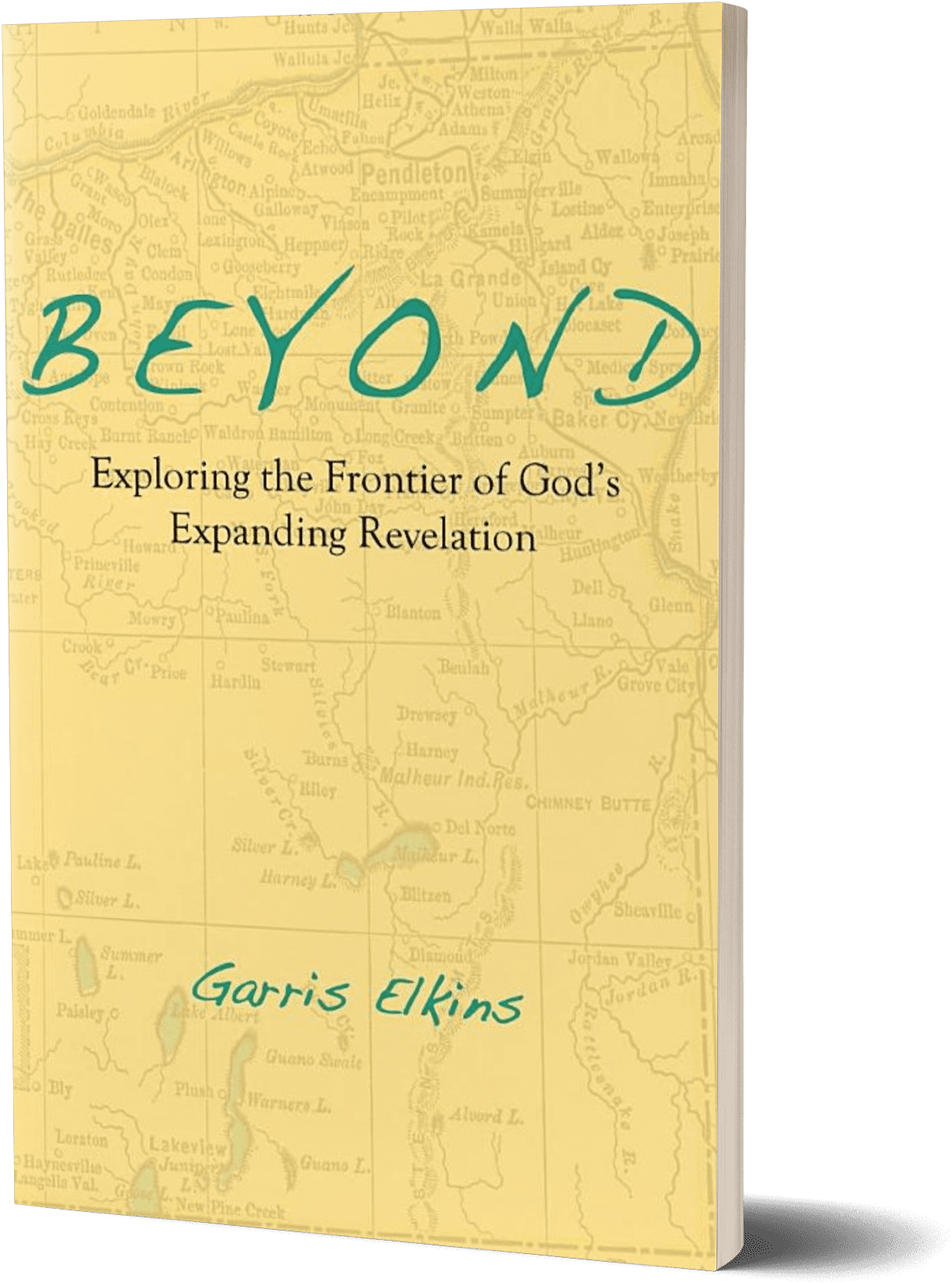
"Circular Teaching" by Garris Elkins


A few Easters ago, I did something I had never done before – I did not focus my teaching on the cross or the tomb.  Please don’t misunderstand me, I did speak about these two profound events, but I went further and preached about the destination of these Easter events - the Throne of Christ. 

As I prepared that Easter Sunday message the Lord spoke clearly to me, “The cross is empty.  The tomb is empty. But the throne is occupied.” That Easter I shared with the church where Christ is now seated as the result of His gaining victory over sin and death.  I taught about the Lord’s need to go through the experiences of the cross and the tomb to get to the throne.  When it was all over that Easter morning, I felt refreshed.  Something had changed in me.

Over the years my teaching about this high day on the Church calendar had become circular.  Year after year, I had gone over the same facts about the death and resurrection of Jesus without realizing that there is always something more that He wants to show us.

If you look at the yearly preaching calendar of most pastors you will find a lot of repetition.  In fact, if you come from a more mainline denomination your teaching schedule may actually be laid out for you year after year.  The same teachings come to be expected at the same time on the same Sundays.  This way of teaching and preaching can end up leading the sheep in well-known circles of understanding instead of into new seasons of revelation.

Alan Hirsch posted an article on his Facebook wall titled, “The Exiling of APE’s.” If you are not familiar with Alan’s APEST test you would think from the title that he was talking about segregating apes in a zoo.  It’s not – the “APE” stands for, “Apostle, Prophet and Evangelist.”  The other two in the APEST chain are the Shepherd and Teacher that round out the list Paul gave us in Ephesians 4:11.

In this well-written article Alan talks about the result of only a Shepherd-Teacher led ministry where equilibrium is the end result.  To a Shepherd-Teacher if a ministry can be made stable enough then all is well. If the APE’s aren’t allowed to come in and shake-up this equilibrium, the Shepherd-Teachers could eventually lead a congregation into decline and eventual death.

Alan said this about equilibrium,

“So, for instance, the Shepherd and Teacher (ST) will tend to design more stable environments where people can learn to relate and grow in their understanding of the faith.  However, as the learning and maturing are to be lifelong activities, communities led primarily by these ST’s will lack urgency and will likely concentrate on issues relating to long-term sustainability.  The net result will be to move inexorably towards a state of what living systems theorists call equilibrium.”

Equilibrium sounds good until we realize that it can produce death in the end.

Hirsch continued,

“The ST functions are ones that bring needed equilibrium into the system.  And this is completely necessary for long-term sustainability—few can survive in chaos situations for too long.  The problem however, arises when the ST functions become disengaged from the full APEST system. The result is that much needed balancing with disequilibrium producing ministries is undone.  When this happens, the dialectical pressure is removed and equilibrium becomes a settled state…and when a living system is in perfect equilibrium it is effectively dead.”

This state of equilibrium is the result of many contributing factors.  One factor can be how we preach and teach. If our teaching calendar has lived in a state of repetitive equilibrium for a few years something needs to change.

About the time I was processing how to teach on Easter, I was also processing the words of the writer of Hebrews in chapter 6:1,

“So let us stop going over the basic teaching about Christ again and again.”

What struck me was the “again and again” part.

Hebrews 6 goes on to list some subjects considered basic to any teaching calendar (not ever to be tossed, but to be built upon) like, repenting from evil deeds, placing our faith in God, baptisms, laying on of hands, the resurrection of the dead and eternal judgment. If you have not taught on these do so. They are valuable and indispensible foundation stones.

After this list of the basics is defined, verse 3 concludes the thought by saying,

“And so, God willing, we will move forward to further understanding.” 

It was this “further understanding” that God revealed to me on that Easter a few years ago.  God had broken the equilibrium in my teaching about Easter.

I have begun to look for other places in my ministry where I have settled for equilibrium and simply doing the same things over “again and again”. This can be a scary journey unless we know this is how God moves His Church forward.  It is a good thing!

2,000 years ago the faith that was once delivered to the Church was never meant to be something fully understood and grasped in total the moment is was dropped into our lives.  Revelation allows us to unpack the package of truth in a forward motion towards a fuller understanding of what we already possess. We build line upon line, precept upon precept in our understanding of this expanding Kingdom of God upon the earth.

God’s revelation was never intended to be parked in some repetitive cycle of doing church.  God has given us other gifts (here come the APE’s) within the equipping gifts list to help us break out of these death spirals of ministry equilibrium as they spin us downwards towards an eventual crash.

This week, as you prepare something to share, ask God for help to move you forward into the expanding revelation of His truth for your congregation.  Yes, cover the basics, but never think they are the destination – they are only stepping stones that are leading you to a greater revelation of Christ. 


Wednesday, February 8, 2012

"The Leadership Pendulum" by Garris Elkins


I remember the first time I heard a concept that I knew was a leadership principle.  At the time I was in my 20’s and studying for the ministry. A wise leader said the Church is like a pendulum – it is constantly swinging back and forth to find a place of balance.  As the years have gone by I’ve come to realize that this pendulum never stops, but continues to swing from side to side as the Church enters and departs different seasons of life and development.

I have lived long enough to see the Church change and transition over time.  I have seen the pendulum swing widely through areas of understanding in gender roles, the ministry of the Spirit, interpretations of God’s sovereignty and a host of other issues.  

This continuous motion of the pendulum is not because God is unsettled, or even that the Church is neurotic; it is because from our viewpoint we only see things in part, not the whole, and all of us are on a constant search for balance.

This is how the Church moves forward – we advance by reconciling imbalance.  Someone once told me that the very act of walking is a linked to a series of movements that have us seeking balance with each new step.  To walk forward we need to let go of our last foothold and pass through a swinging gait of imbalance to gain a new balanced foothold.   

The pendulum of the Church continues to swing because in any given moment we are out of balance in our current understanding about what God is doing upon the earth. I am not saying what we currently understand is wrong – it is simply not yet fully developed, no matter how mature we think we are. There is always more than we are seeing in any given moment.

Our tendency is to park our comprehension of God and His Kingdom somewhere along the timeline of certain events or revelations that we have experienced. When this happens we begin to build our concept of ministry around that stationary observation. The outcome of this way of thinking is that we actually stop growing and learning. Narrow vision sets in and we begin to view life and ministry with the blinders on.  From this stationary posture we can begin to construct a defensive compound from which to protect our limited understanding against any perceived change from outside our position.

The pendulum has been swinging throughout the entire history of the Church.  I think this is actually God’s plan.  Growing things are never static.  Motion means you are alive.

Just when I think I fully understand a point of theology, or how the Church should be led, or what is the best model is for doing church on Sunday morning, God will lovingly take me to a wider and more expanded view of what He is accomplishing in His people.   He does this by showing me the smallness of what I have chosen to see. Realizing the smallness of my own vision allows me to repent and begin live in greater humility and see the value of differing opinions than the one I hold.

Realizing we don’t know all things keeps us open to expanding our circle of fellowship to include others who may not process life like us.  A willingness to admit my limited understanding deconstructs the pride that comes when I think I fully see and understand all that is happening along the swinging arc of the pendulum.

I have learned a few things as I have watched this swinging pendulum of understanding within the Church.

I have learned that I need to be careful to not capture and define what I think God is doing, mid-swing in the pendulum arc, and build a definition around that limited understanding.  The leaders I observe, who lead from a place of peace, are not trying to get the pendulum to stop so they can define something.  These leaders step back and watch the pendulum from a distance and try to anticipate in what direction God is taking His Church and then begin to move their lives and ministries in that direction. 

I have learned that it is wise to resist the urge to park our understanding anywhere along the arc of a developing principle. At the point where we park we become irrelevant in our ability to engage developing realities and emerging generations of leadership. To finish well means that we must remain mobile in the way we think about our lives and ministries so that past seasons don’t define us. 

I have learned that the older a person gets the more the desire surfaces to return to “the good old days”. This desire must be seen as a warning that we are not engaging the moment.  We all have preferences and life-experiences that warm our hearts. They were never intended to lead us, rather, they are to be stones of remembrance left behind along the trail of our developing journey.  The destination is always out in front.

Finally, I have learned that the pendulum is a teacher.  Too many times I have felt I had some current issue all figured out and then God had me sit in front of the swinging pendulum and simply watch.  As I watched, I realized that some of what I thought ten years ago I no longer processed the same way today.  Those people and ministries I disapproved of years ago are now closer in thought and fellowship to me than ever before. The swinging pendulum has taught me let go of snap judgments and it has freed me to wait awhile until the pendulum swings back my way with a new and clearer understanding of what is taking place in the Church.

Friday, January 27, 2012

“A Return to Awe and Amazement” by Garris Elkins


Recently, in a time of corporate prayer, I sensed the Holy Spirit ask me a question, “Am I awed by God or impressed by man?" While this question was asked within the quiet confines of my heart, I knew it was for all who were present that day.  A few minutes later I asked the question out loud for all to hear.

I think the question surfaced, in part, because for the last few years the second chapter of Acts has been unpacked for me in new ways.  I am seeing things in the text that I had missed on many past readings.

What I began to notice in Acts 2 was the repeated experience of people being amazed by God or awed by His presence. Whenever the Word repeats something I take special notice.

The entire city of Jerusalem was affected by the supernatural uproar caused on the Day of Pentecost. Acts 2:6 reads, “When they heard the loud noise, everyone came running, and they were bewildered to hear their own languages being spoken by the believers.”

Verse 7 goes on to say about those who came running, “They were completely amazed.” This was not a partial amazement, but a total and complete amazement at what God was doing. Today, we might say, “They were blown away!”

After declaring how awesome it was to hear the wonderful things God had done in their native tongue, the text continues in verse 12, “They stood there amazed and perplexed. ‘What can this mean?’, they asked each other.” They were stopped in their tracks by the experience – they just stood there – amazed.

Peter went on to preach his famous Day of Pentecost message.  After the message these amazed listeners asked, “Brothers, what should we do?” Peter told them to repent of their sins, turn to God and get baptized, and then they would receive the amazing Spirit of God. After Peter finished speaking, 3,000 amazed and awestruck people were added to the Church.

This amazing work of God did not stop on the Day of Pentecost.  God’s work birthed a community of faith who were ruined for anything that wasn’t amazing or awe inspiring. A normal and predictable Christianity would not hold the attention of this group.

Later on in Acts 2 the believers formed a community and devoted themselves to the apostles’ teaching, fellowship, common meals and prayer.  Verse 43 says, “A deep sense of awe came over them all, and the apostles performed many miraculous signs and wonders.” Pentecost was not a terminal event locked in history.  The events of Pentecost began unfolding forward into the developing history of the Church and has gone on for the last 2,000 years.

I used to think the signs and wonders produced the awe within this first community of faith (vs.43), but the text says the miracles followed the awe that had come over them. The awe of God first fell in their midst much like the Spirit fell just days before on the Day of Pentecost.  Once the awe arrived the miracles soon followed. This awe of God falls into our midst because if comes from Heaven, not from what we do on earth. Our works can be impressive at best.  God’s works are awe-inspiring and leaves people standing in amazement

In some ways I think our greatest need in the Church today is to have the awe of God fall upon us.  It has been too easy to get impressed with all the Church does with our latest leadership strategies, stage lighting, good music and all the other stuff of ministry. These elements are not evil and might be needed in certain assignments, but at their best, they can only impress.

Peter told the crowd assembled on the Day of Pentecost that God had publicly endorsed the ministry of Jesus by doing powerful miracles, wonders and signs through Him.  Today, God wants to endorse the ministry of His Church in the same way.

I watched a NASCAR driver win a race and he held up an energy drink from one of the paying sponsors who had endorsed him for the race.  I am wondering if we might rediscover a sense of awe in the Church if we held up things before the world that would endorse the supernatural ministry of Jesus in our midst. I think this would create the kind of awe and amazement that would have our communities come running to see what was happening. That would be truly impressive.

Wednesday, January 25, 2012

"Spiritual Environmentalists" by Garris Elkins


The word “environmentalist” can make you happy or angry depending on how you view politics and culture.  Actually, it is a very good word when used in conjunction with God and His Kingdom. An environmentalist is concerned with the long-term health of the place where they live. The same is true for a spiritual environmentalist within the Church.

Some have asked me how to create an environment where the Spirit of God is free to dwell among us. This question was not asked regarding the personal possession of the Spirit that all believers enjoy. This question refers to that corporate experience with Jesus that takes places when two or more gather in His Name, whether in a corporate church gathering or over coffee at Starbucks.  

In Matthew 18 Jesus said, “For where two or three are gathered together in My name, I am there in the midst of them.” This kind of revelation of God’s presence, when more than one person is present, is what we mean when we say, “the manifest presence of God.” We carry Him within each of us all the time, but when we come together His presence is “manifest” between us in a different way– in the midst of us.  Here is where the pollution can take place, between people, in the midst of our relationships.  This “in the midst” place is where we are supposed to go work as spiritual environmentalists to clean up the junk and sludge of our own brokenness that is not only polluting our lives, but the lives of others as well.

When I talk with leaders within the Church-at-large, I tell them that they are responsible to create an environment where the Holy Spirit is free to make Jesus known. This environment becomes a reality when the priority of the local church is not growth, miracles or even salvations.  Are three of these are wonderful by-products of a healthy environment and are very important, but they are not our first priority.  Our first priority as a church is to host the Presence.  Anything that hinders this hosting of His presence will hinder the work that God wants to do in our midst.

This healthy environment becomes a reality when we personally choose to pull the weeds of self and striving and give God back a garden of life where He is free to walk and minister among us. This environment becomes a reality when we follow the toxic streams of personal runoff to their source and deal with our wrong heart attitudes that breed death, not life.

The Second Adam – Jesus – did not redeem us back to the events and curses that immediately followed the sin of Eden.  Our Second Adam redeemed us back to the realities of Eden, before the Fall, where He could walk with us unhindered through a beautiful and unpolluted place.   This is the ministry of a Spiritual Environmentalist.


Thursday, January 19, 2012

"Be Careful With First Reads" by Garris Elkins


Recently, I read a blog article written by a very respected young leader.  He is well read and well educated.  He does things with excellence.  He has become noticed for all of these attributes and rightfully so.

Because we are all in a hurry from time to time, I did a quick read on something he wrote.  I missed what he was saying and began to carry an offense based on my quick, narrow and judgmental read. I found myself wanting to correct him in a public forum.

For an entire day I carried a burr in my saddle.  I was thinking about how to correct this young man. Maybe I would Tweet a reference to what he wrote or write something on Facebook.  This went on all day until later that evening when the Lord had me reread the article.  I could hardly believe it – on the second read I realized that I was terribly wrong and misinformed. This young author was saying something that was not only accurate, but much appreciated by me for it’s content.  My hurried read was blind. I am so thankful I did not respond out of  my blindness.

I came away from this embarrassing revelation learning a few things about myself. I also came away with some things we all need to be reminded of from time to time:

1. A first read is just that – a first read.  Rarely do we ever capture a writer’s true content the first time around.  We owe it to the author, and to the Church at large, to read things again to make sure we are actually correct in our observations. And even then, we should not forget that we only see things partially.

2.  We all carry reactive baggage.  This author was touching on something dear to my heart.  I was defensive about this truth and had anointed myself as its protector. Our reactive baggage is usually packed with items from our broken history and unresolved personal issues.  Reactive baggage cannot be trusted to speak the truth – it needs to be laundered.

3.  Believe the best.  When we read what someone else has written we owe them the honor of believing the best about them and not making snap judgments. Our judgments put people in a place where we don’t have to engage them.  This results in separation.  God is not happy with separation because it breaks fellowship.

4.  My response revealed that God has more work to do inside my heart. We never arrive at a place where we can’t be corrected. I had to tell the Lord how sorry I was regarding my response and admit to Him that I needed His help.

5.  Wait before you pounce.  It only takes a little more investment of time to do something right.  A wrong response, and the resulting hurt, may never be retrievable if you let ill informed judgments lead the way in your response to what you do not understand.

6.  Let the author know how much you enjoyed their article.  You don’t have to dump all the facts about your personal struggle.  A simple affirmation about the article does two things.  First, if just feels good. And second, maybe God can open up a relational bridge with this person that would never have existed had you not walked through this correction of your wrong attitude.

Years ago, Jerry Cook wrote a book titled, “A Few Things I’ve Learned Since I Knew It All.” Jerry was transparent about how life can teach you new things when you think you know it all.  I don’t like the feeling that comes when I think I know it all and find out I didn’t know as much as I thought.  A good “God-correction” is like taking a spiritual bath.  You come out clean all over. It feels good.


Saturday, January 7, 2012

"The Sound of Heaven" by Garris Elkins

On the Day of Pentecost God released the sound of heaven into the Upper Room to empower the Church to release the sound of heaven into the world.  


Many supernatural things took place on the Day of Pentecost, like a sudden sound coming to earth from heaven, a roaring wind that blew through the room, flames resting on each person and those present speaking in languages they had never learned. This is what took place at the birth of the Church. It was a very supernatural experience.

As we read the account of that day, the real message of Pentecost can be obscured behind all the supernatural things that took place. In Acts 2:11 the people said, "And we all hear these people speaking in our own languages about the wonderful things of God has done." The sound of heaven, spoken through the Church, was be heard as "the wonderful things God has done."

It seems to me the message of the Church today should still be this wonderful message of the great things God has done.  These "wonderful things" is the sound of heaven.  When the voice of heaven speaks through the Church of the wonderful things God has done, the culture's response will be the same today as it was on the Day of Pentecost.

The sound of heaven is a message filled with a wonder at the love of God.  This sound of heaven is our message to the world and this is truly the evidence that we are Spirit-filled believers.


Thursday, December 22, 2011

“A ‘Bass-Ackwards' Approach to Ministry” by Garris Elkins

As a young boy during the summer break from school my dad used to take me along to help out on his construction sites. Dad built houses and he also owned a house moving company. I was always working each summer.

Dad would assign a project to me and then go elsewhere on the job site. Upon his return there would be times dad would say, “Son, you got that one ‘bass-ackwards’.” That famous line meant I was doing something in the reverse order of how it should be done. He would show me my mistake and then share the remedy. He wouldn’t do the work, he simply showed me how to undo the “bass-ackwards” nature of my first attempt.

If dad were here today he would look at how some of us pastors do the ministry and he would say we are turned around. He would say to return to Ephesians and read chapter four again and recognize that our job is to “equip God’s people to do his work and build up the church…”

In fact, dad would go on to say that the growth of the Church is never the pastors responsibility. God grows things that really last. The people you have equipped and built up are the ones who will share their faith and help lead others into a living relationship with God. They will be the ones who invite people to a community of faith to experience spiritual growth and maturity.

I think dad’s view about the “bass-ackwardness” of a young boy’s construction jobs applies to church leadership today. Do your best to equip and build up God’s people. When we make this decision to reorder how we see the ministry, our levels of stress and performance will diminish greatly. The things of life and ministry will then naturally reposition themselves in a healthy God-order that won’t be so “bass-ackward.”